Wild Appetites: Bizarre Bushveld Bites
The African savannah is a place of brutal beauty and strict survival, where every creature must find clever ways to fuel up in an unforgiving landscape.
But if you look close enough, you’ll realise that the food chain here isn’t just a simple line of predators and prey. It’s full of strange cravings, quirky nutritional hacks, and downright bizarre snacks. Welcome to the weird side of the African bush, where what’s actually on the menu might just make your jaw drop!
Here’s a little bush science. Organisms are usually classified in categories called trophic groups or dietary guilds based on animals’ primary food sources. These are further divided into primary trophic groups (herbivores, carnivores, omnivores and detrivores) and specialised dietary guilds (frugivores, folivores, insectivores, piscivores, etc.). Animals generally fall into one of these categories based on what they consume.
Carnivores, in the African jungle, have a wide range of diets. Perhaps the most famous of these is the lion. They hold a special place as apex predators, commanding their domains with absolute supremacy and a fierce, uncontested power.
Even with this prominent status in the jungle, lions can feed on animals 10 times their size. They have in fact been observed feeding on organisms as small as termites. Lions are known as ‘obligate carnivores', and meat from ungulates (animals with hooves) makes up to 75% of their diet, and they rely entirely on it for survival.
However, they have been known to eat vegetation like grass and even fruits. No, this is not their idea of an entree or a healthy snack or dessert! In moments of sheer desperation, they will readily forage for anything that looks remotely edible, swallowing coarse grasses, acidic fruits, or whatever else they can find to survive, but it is most often for gastrointestinal relief. When their stomachs are upset, they may ingest grass in order to induce vomiting or to clear up fur balls.
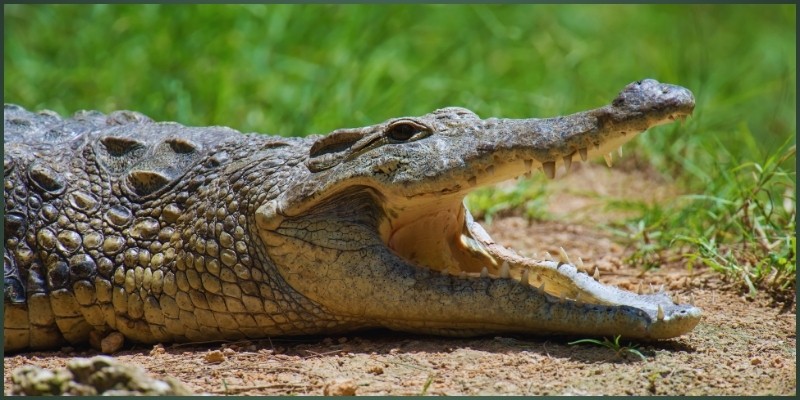
Another feared carnivore is the crocodile, and being yet another apex predator, its opportunistic and eats whatever meat is available – ranging from fish and birds to large mammals.
Feared for their stealth-based hunting tactics and extreme bite force, an unusual feature in their diet is stones and rocks. It has been theorised that they eat stones and rocks so that they can use them as ballast for buoyancy control in water, submerging them so that they can stay underwater without making bubbles to make them undetectable when stalking a target. In addition, eating rocks helps crocs digest some of the hard protein and crush bones, shells and tough hides they consume from other animals. Crocodiles are not the only creatures known to use these stones, named gastroliths, to help digestion. Also the ostrich, giraffe, some species of tortoise, and even chickens are known to eat rocks.
Hidden in a small region on the western coast of Africa, in Cameroon and Equatorial Guinea, lies the Goliath frog. As the name suggests, these aren’t your usual frogs found in nearby ponds. In fact, they reach sizes of 32-45 cm long and can weigh up to 4 kg.
Given their size, it may make sense that they are known to have carnivorous food preferences, eating fish, small mammals and other amphibians, in addition to staple frog diet fixtures of worms, insects and slugs.
Another unsuspecting carnivore comes in the form of the shoebill stork, a large bird found around the freshwater papyrus swamps and marshy floodplains of East Africa, across Uganda, South Sudan, Rwanda, and Western Tanzania. Using its pronounced shoe-shaped bill, it snares fish and small mammals in between its bills, which make up much of its primary diet.
Sometimes animals have nutrient deficiencies because their diets force them to eat too much of the same kinds of food. Due to a calcium deficiency, it is not uncommon to find giraffes chewing on bones they find out in the wild. How they know that bones contain calcium we are yet to find out!
At times zebras, impalas and elephants have been observed licking and chewing on soil, a practice called 'geophagia'. They do so when they are lacking certain minerals which are rich in vital electrolytes and trace elements of sodium, magnesium, calcium and zinc, and these are often scarce in purely vegetarian diets.
These minerals are found in clay soil which has salt deposits, and they are called ‘mineral licks’.
The specialised structure of clay also gives it unique absorbent properties. When animals ingest toxic plant matter, the clay molecules bind to the harmful compounds, preventing them from being processed by the digestive tract.
There are also animals classified as 'facultative', which is essentially the opposite of the obligates mentioned earlier (the lion and the crocodile). These are known to be opportunistic, and their diet is optional.
An example is the warthog.
Omnivores naturally consume both plant and animal matter to obtain their energy and nutrients. Warthogs are thought to be omnivores, as they have been observed eating fresh carcasses, but they are known to eat meat only under extreme circumstances. When they do eat carcasses, they may actually be seeking out the stomach contents, scavenging for the semi-digested, nutrient-rich green matter left behind inside the stomach.
While these bizarre dietary quirks might seem like nothing more than gross or funny habits, they are actually testament to the absolute genius of evolution. In the unforgiving terrain of the African wilderness, nothing goes to waste, and every creature has evolved a highly specialised strategy to get exactly what its body needs to survive. It's proof that the bush is an intricately connected puzzle, where even the strangest snacks serve a grand, vital purpose.