The Best Time to Visit Hwange National Park
"When is the best time to visit Hwange?" It’s a common question we hear at the Association for Tourism Hwange - and the honest answer is that the park doesn't have a single "best" moment, it has four distinct personalities. Hwange is a vast space with contrasting landscapes, covering over 14,000 square kilometers of Kalahari sands, teak forests and open vleis. Depending on when you step off the plane, you might encounter a parched, high-drama battlefield or a lush, emerald Eden.
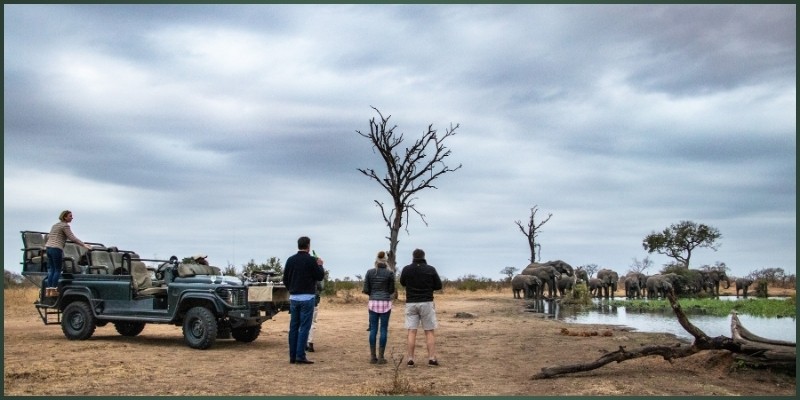
For the traveler who craves raw spectacle, the months of June through October are unparalleled. This is the peak of our dry season, a time when Hwange’s unique system of pumped waterholes becomes very critical. It is not uncommon to sit at a single pan and watch a shifting parade of hundreds of elephants, buffalo and a stream of plains game throughout the day. This is high-drama territory; predators know exactly where their prey must go, and the tension at the water’s edge is palpable.
If your ideal safari involves crisp air and the golden light of the African winter, aim for May through July. The mornings are a bit chilly, you’ll be grateful for the ponchos provided on game drives and you’ll rush to the camp fire when you get back in the evenings. But, despite the cold mornings and evenings, the daytime temperatures are typically comfortable with sunny, clear blue skies. As vegetation in the forest begins to fade away, visibility improves. This is the premier window for walking safaris, as the thinning bush allows for safe, expert-led tracking of lions or the regal sable antelope. It’s a time of classic elegance, where the dust hasn't yet dominated the horizon and the light is a photographer’s dream.
Conversely, the December to March window reveals a Hwange that many never see. It’s known as the "Green Season" - a time when the rains arrive to quench the parched grey earth. The landscape literally turns emerald overnight. The air is washed clean, the dust settles and the park becomes loud with the sounds of life. This is the Birthing Season, when wobbly-legged impala lambs and zebra foals take their first steps under dramatic, bright blue skies. For birders, it is absolute paradise; migratory species like the Carmine Bee-eater arrive in a riot of colour and the park’s count swells to over 400 species. While the thick summer bush makes spotting big cats a greater challenge, the sheer vibrancy of the ecosystem is its own reward.
For those who seek the luxury of true solitude, the months of April and November are Hwange’s best-kept secrets. These are months of transition, November waiting for the first clouds to break, and April watching the last rains fade. You will often find yourself at a major sighting with no other vehicles in view, experiencing a level of exclusivity that more famous parks simply cannot offer. You get a taste of both worlds: the lushness of the rains and the increasing wildlife concentrations of the dry.
Whether you are chasing the adrenaline of a lion hunt in the October heat or the quiet song of a migratory bird in the January rains, the Hwange National Park offers a version of itself that will meet you exactly where you are.