How African Cultures Preserve the Environment
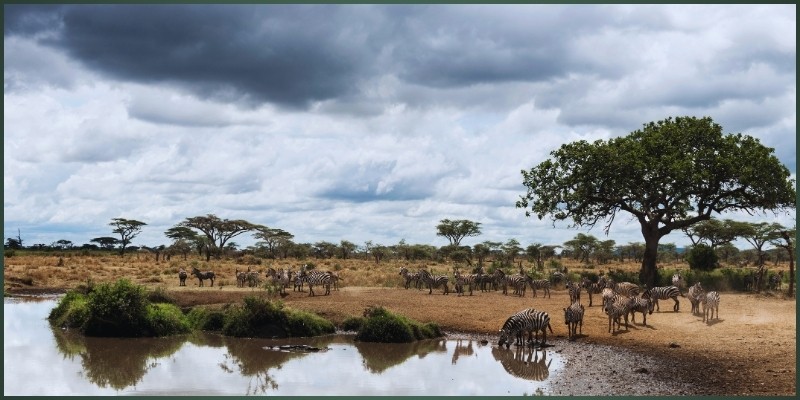
Globally, Africa’s diverse ecosystems are famous for their distinct flora and fauna, ranging from the iconic Big Five to unique desert plants. The continent is home to about 17 per cent of the world’s forests. Unfortunately, Africa’s beautiful landscapes are in danger of being lost forever as millions of acres of forests are cut down each year.
Deforestation, the human destruction of the earth’s forests through the permanent removal of trees to clear land for other uses, is the primary threat to the continent’s natural environment.
This started happening in the mid-1950s, increasing throughout the 2000s and now into the 2020s. Agriculture is the leading cause of deforestation in Africa due to farming global cash crops and regional food staples like palm oil in regions like Cameroon, Nigeria and Gabon; cocoa in Ghana and the Ivory Coast; cassava, maize and yams in the DRC and Tanzania; and coffee in Ethiopia and Uganda, amongst other crops.
Large-scale cattle ranching in the Southern and Eastern regions of the continent is also a massive driver of forest conversion to grassland.
As the continent is mostly comprised of developing nations, there is a huge need to use trees for fuel and charcoal production. People who live in rural areas often use firewood collected from nearby forests and bushes for heating and cooking in their homes, or for commercial trade in the city. Those not living in rural areas are facing rapid population increase, and that directly corresponds to increase in urbanisation. As cities grow, there is demand for land to be cleared. Mining, a great source of wealth in the continent, is another contributor to wide scale deforestation as land is cleared for extraction of gold, diamonds and other rare-earth minerals.
A crucial effect of all this deforestation is the habitat loss associated with it. When forests are destroyed, millions of plants and animals, some unique to specific regions, are lost, sometimes forever. As an example, chimpanzees only found in the Congo Basin are facing extinction due to habitat loss.This is also a direct cause of the decrease of biodiversity, and if some species are destroyed, scientists believe they may vanish into extinction before they can identify them or unlock their benefits.
Other ways in which the environment is being degraded is through the oil exploration in parts the continent like the Niger Delta (Nigeria), Lake Albert Basin (Uganda), Okavango River Basin (Namibia and Botswana, etc., which sees oil leaking onto the delicate environment, ruining mangroves, fracturing critical wildlife corridors for elephants, and contaminating water systems (the Okavango Delta, a UNESCO World Heritage site), respectively. There is also illegal poaching present in South Africa’s Kruger National Park targeting both black and white rhinos; Mozambique’s Niassa Special Reserve targeting elephants for ivory and lions for their teeth and claws; and DRC’s Garamba National Park targeting gorillas for bushmeat, amongst other animals.
Long before modern logging, oil exploration and poaching scarred the landscape, Africa’s heartland was a majestic, sprawling fortress of green, where towering hardwood giants stood guard over thousands of miles of vibrant, untamed undergrowth that had evolved peacefully over a millenia. This was due largely to the indigenous tribes that knew how to communicate and live with the natural environment in harmony to keep the delicate fabric of nature intact. Now that the amount of such tribes have decreased due to colonialism and urbanisation, the land has lost values and traditions that kept the ecosystem alive.
There are many ethnic tribes that have formed deeply sacred connections to the land, rivers and natural resources. An example is the Ogoni people, a group primarily found in the Niger Delta region of southeastern Nigeria. As a principle of their culture, they have established sacred groves where certain wildlife species are protected since.
The Maasai people of Kenya and Tanzania, practice rotational grazing to protect the land from being overused, giving the vegetation the vital time it needs to heal and regenerate. This is a practice that maintains soil fertility and reduces desertification that may be caused by stripping soil cover. The San people of southern Africa are one of the oldest hunter-gatherer groups in the world and employ sustainable hunting so that the animal population remains stable. In addition, their profound understanding of animal behaviour allows them to hunt with precise efficiency, taking only what they need without fracturing the delicate balance of the ecosystem.
The Bantu tribes utilise distinct identity markings using totems that they attach to their names, thereby forbidding particular groups or clans from eating, abusing, or indiscriminately killing animals associated with their totem animal. For instance, in the Shona culture, people who belong to the patrilineal clan of shiri (bird) must not eat birds, or at the very least, abuse them. If they were to go against that, culture dictates that as a taboo with dismal consequences like illness, misfortune, or they can even face the risk of losing all their teeth.
These practices in culture and tradition kept the natural ecosystem thriving for thousands to years, and unfortunately that knowledge and wisdom is slowly being lost in time. However, the path toward a vibrant, resilient future for Africa’s wilderness lies at the intersection of heritage and innovation. By blending ancient indigenous conventions with cutting-edge conservation methods, we can rewrite the future and truly safeguard the continent’s breathing ecosystems. To achieve this, governments can legally recognize and protect indigenous land rights. Modern conservationists can collaborate with native leaders to combine traditional ecological knowledge and modern scientific research. Lastly, indigenous communities can have outreach initiatives in which they teach local communities their methods of nature preservation and wildlife management. Only by doing this can we hope for a better future for the continent’s ecosystem.