Hwange’s Migration Routes
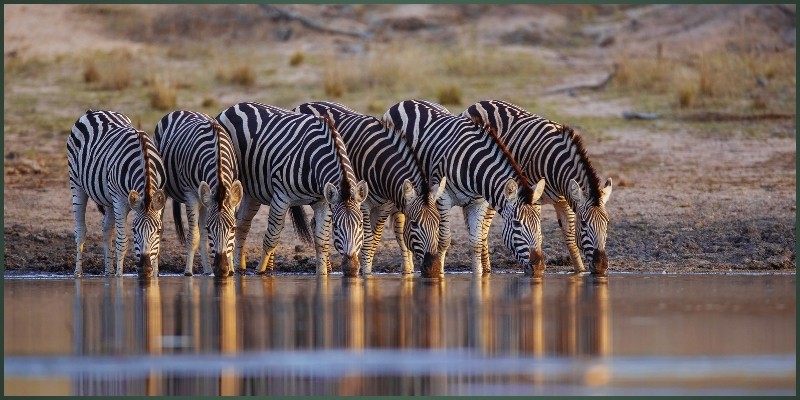
The movement of wildlife across the Hwange landscape is more than a search for food, it is a 14,000-square-kilometer chess match played against the heat, the sand and the seasons. To understand this park is to understand that Hwange is essentially a vast basin of ancient Kalahari wind-blown sand, a thirsty landscape that holds onto its secrets (and its water) with a stubborn grip.
The defining pulse of the park is governed by what conservationists call the "Pumped Pan" phenomenon. Because Hwange lacks major natural rivers, the survival of its inhabitants was historically a desperate gamble. In the 1930s, the park’s first warden, Ted Davison, observed that during the height of the dry season, the wilderness became a graveyard. He famously wrote in his memoirs, Warden of the Wild, that "water was the key to everything, without it, the park was a hollow shell." This realisation led to the installation of the first boreholes, effectively creating a man-maintained sanctuary that fundamentally altered how animals move. Instead of a linear migration away from the park to the Zambezi River, Hwange now experiences a radial migration, where thousands of animals move in a rhythmic daily cycle from the deep, shaded teak forests to the open, water-rich pans.
Among these travelers, the African Elephant is the undisputed architect of the corridor. Hwange’s population is legendary, but their movement is strategic rather than random. A matriarch carries a mental map of the landscape that spans decades, remembering hidden water sources from droughts that happened before her youngest calves were even born. As these giants move, they perform a vital service for the smaller breeds. They are ecosystem engineers, physically widening the pans by wallowing and carrying away mud on their massive hides, and knocking over trees to create the very grasslands that the grazers rely on.
In the northern reaches of the park, where the terrain shifts from sand to basalt and granite hills, the movement takes on a different character. Here, you find the majestic Sable and Roan antelope. Unlike the chaos of the elephant herds, these breeds move with a nervous, high-status elegance. Perhaps the most fascinating, and often overlooked movement is that of the Painted Dogs or African Wild Dogs. While a lion is content to defend a fixed territory, the Painted Dog is a nomad of the highest order. A single pack can cover 30km in a single morning, moving with a fluid, relentless energy that makes them the most successful hunters in the bush.
Then there is the invisible movement that happens under the striking blanket of stars during the Kalahari night. Species like the shy, desert-adapted Gemsbok, found in the western corners of the park near the Botswana border, move toward the pans under the safety of darkness. This cross-border movement is part of the Kavango-Zambezi (KAZA) Transfrontier Conservation Area, a massive international effort to keep the ancient "migration paths" open. As the late conservationist and author Nick Greaves noted, "Hwange is the heart of a lung that breathes across borders. When the animals move, the whole of Southern Africa feels the pulse."
Ultimately, for the visitor sitting at a viewing hide, the movement of Hwange is a lesson in patience. You are witnessing a landscape that is constantly breathing, inhaling life toward the water during the heat of the day and exhaling it back into the safety of the scrub at night. It is a genuine, unscripted drama where the smallest termite and the largest elephant are equal partners in a grand design of survival.